
Learn the benefits of experiential merchandising for your brand and your customers
Your customers don’t need to visit your store to buy your products. Yes, we know – controversial statement. But – true.
People want to get out of the house and visit stores. But people expect your store to be more than just a store.
Immersive. Personalized. Memorable. Interactive. Multisensory.
This is experiential merchandising.
This is what people want. This is what gets people walking into and spending money in your store.
Think like a curious 5-year old. Forget what you know about traditional retail. It’s time to go all in on experiential merchandising.
What is Experiential Merchandising?
Experiential merchandising is a retail strategy built on people and not selling products.
You’re walking by your local arts and crafts store. You’ve walked by this store hundreds of times and never given it a second glance. You’re not an artsy person.
But today. Today is different. Something catches your eye.
There are people in the window. You see people laughing and having fun. You stop. Take a closer look.
It’s an art class. Two people are standing in front of easels and flicking their paint brushes at the canvas. They are doing this in the window.
You can hear them talking excitedly about what they’re doing. You want to feel what they’re feeling.
Before you know it, you open the door and get in line so you can feel and experience the same thing. Turns out, you’re an artsy person. You leave the store with some new art supplies and have signed up for a weekly art class.
The window display made you stop, engage, and connect.
This is experiential merchandising.
Customers Want Experiences First
Customers still want to visit stores, but the store experience has to feel worth the trip.
- Nearly three-quarters of surveyed global consumers — 72% — still shop in stores
- In-store shopping remains the preferred channel for 37% of surveyed consumers
- 30% of surveyed consumers want retailers to make the in-store experience more interesting
- More than 40% of Gen Z and millennial shoppers say experiential retail makes them more likely to shop with a retailer
- 35% of surveyed consumers still want visually appealing stores with no wait times (NRF/IBM, Adyen, ICSC/McKinsey)
Where Experiential Marketing Fits In
Experiential merchandising and experiential marketing work together, but they are not the same thing.
Experiential marketing is how you create a moment people want to notice, talk about, share, and remember. It can happen through a pop-up, product launch, event, social campaign, limited-time installation, in-store activation, or brand experience.
Experiential merchandising is how that idea shows up inside the store.
It is the fixtures, graphics, lighting, layout, product presentation, interactive displays, and physical details that help customers understand the experience once they walk through the door.
The marketing might get people interested. The merchandising helps the store deliver on the promise.
Without experiential merchandising, experiential retail can fall flat. The campaign may bring people into the store, but the physical environment is what helps them engage with the idea, move through the space, interact with the products, and remember the experience.
That is why the marketing idea and the in-store environment need to be planned together. When they support each other, the experience feels clear, intentional, and connected to the brand.
The 5 C’s of Experiential Marketing in Retail
A good experiential marketing idea needs more than a clever theme. It needs a clear plan for how the idea will work in the store.
These five C’s can help retailers connect the marketing concept to the in-store experience.
1. Customer
Start with the customer, not the display.
What do they care about? What problem are they trying to solve? What would make them stop, look closer, walk in, stay longer, or come back?
An experiential retail idea should feel useful, interesting, or memorable to the people you actually want in the store.
2. Concept
The concept is the core idea behind the experience.
It should be easy to understand and clearly connected to your brand, product, season, campaign, or customer need. If the idea needs too much explanation, it will be harder to translate into fixtures, graphics, signage, displays, and customer flow.
A strong concept gives the installation team something clear to build around.
3. Context
Context is where the idea meets the real store environment.
A flagship store, mall kiosk, shop-in-shop, department store display, and national roll-out all come with different site conditions, space limits, timelines, materials, access points, and installation requirements.
The best experiential ideas account for these details early, so the finished environment feels intentional instead of forced into the space.
4. Connection
Experiential marketing should give customers a reason to participate.
That connection might come from touch, movement, personalization, product testing, education, entertainment, social sharing, or community. The goal is not to add activity for the sake of activity.
The goal is to help customers feel more connected to the product, the space, and the brand.
In the store, this connection has to be supported by clear graphics, smart product placement, intuitive flow, and displays that invite people in.
5. Consistency
A great experience should not fall apart from one location to the next.
If the activation is part of a larger retail roll-out, every store needs to support the same brand standards while still accounting for local site conditions. Fixtures need to be installed to specification. Graphics need to be aligned. Materials need to arrive on time. Details need to be checked.
Consistency is what helps an experiential idea become a repeatable retail program instead of a one-off moment.
Four Benefits of Experiential Merchandising for Brands and Retailers
There is a reason experiential merchandising is getting more attention in retail.
When it is planned well, it gives customers a reason to visit the store, spend time in the space, interact with products, and remember the brand.
1. Increased foot traffic
Experiential merchandising gives people a reason to seek out your store.
A strong in-store experience can turn a product launch, seasonal campaign, pop-up, workshop, or interactive display into something customers want to visit in person.
The experience should feel like a natural part of the store, not something added at the last minute. That means thinking about colour, layout, lighting, customer flow, decompression zones, fixtures, graphics, and how people move through the space.
2. Brand awareness
Experiential merchandising can help your brand stand out in a crowded retail environment.
The goal is not to be different for the sake of being different. The goal is to create an experience that feels connected to your brand, your products, and your customers.
That might mean rethinking a window display, creating a more interactive product launch, building a seasonal installation, or using graphics and fixtures in a way that makes people stop, look closer, and remember the brand.
3. Social engagement
Memorable in-store experiences often extend beyond the store.
When customers encounter something useful, surprising, interactive, or visually interesting, they are more likely to talk about it, photograph it, and share it.
That does not mean every experiential merchandising idea needs to be designed only for social media. But it does mean the physical store can support digital engagement when the experience gives people something worth sharing.
4. Community connection
A physical store can bring people together in ways an online store cannot.
Classes, workshops, live events, guest speakers, pop-ups, product demonstrations, art installations, and community partnerships can all give customers a reason to visit beyond a single purchase.
These experiences help the store become part of a customer’s routine, not just a place they visit when they need to buy something.
Experiential Merchandising Strategy, Not Hype
There is a fine line between experiential merchandising that works and experiential merchandising that feels like a gimmick.
It can be tempting to rush in and try everything: interactive displays, pop-ups, social moments, immersive graphics, limited-edition products, and unexpected in-store features.
But bigger is not always better.
A strong experiential merchandising strategy starts with your customers, your brand, and the reason people visit your store in the first place.
What do your customers care about? What problems are they trying to solve? What would make them stop, look closer, participate, and remember the experience?
That is how experiential merchandising moves from hype to strategy.
Imagine a holiday shopping trip at a busy mall. Parents are tired. Kids are bored. Everyone is hungry. No one wants to keep walking from store to store.
Now imagine the mall’s food court has a series of small, branded pop-ups connected to nearby retailers.
One pop-up has a virtual fitting room. Another lets shoppers design a custom T-shirt. Another features a livestreamed performance. Another gives shoppers a quiet place to sit, recharge, and explore products through interactive screens.
Each experience gives shoppers a reason to engage. After participating, they receive a QR code that unlocks something special in the actual store: early access to new products, limited-edition merchandise, exclusive event tickets, or a private product preview.
The experience solves a real problem. It gives bored shoppers something to do, helps parents reset, brings attention back to the stores, and gives retailers a reason to continue the conversation once people walk through the door.
That is experiential merchandising working as a strategy.
It is not activity for the sake of activity. It is a connected retail experience that uses marketing, merchandising, technology, fixtures, graphics, and store flow to guide people from curiosity to participation to purchase.
And for that experience to work in the real world, every physical detail matters.
The pop-up needs to be built properly. The graphics need to be clear. The fixtures need to support the interaction. The QR codes need to be placed where people can find them. The store team needs to understand the flow. The experience needs to feel intentional from the food court to the store.
That is where the idea becomes a finished retail environment.
How Dynamic Resources Supports Experiential Merchandising
Experiential merchandising depends on more than a strong idea.
It depends on how that idea is planned, built, installed, adapted, and maintained in the physical store.
That is where Dynamic Resources can help.
As a retail design and installation partner, Dynamic helps brands turn experiential concepts into finished store environments. That work can include:
- Fixtures and millwork
- Graphics and visual merchandising elements
- Site surveys
- Fabrication
- Warehousing and logistics
- Installation
- Maintenance and repair
Dynamic’s project work shows how experiential merchandising can take different forms depending on the brand, store format, and customer experience.
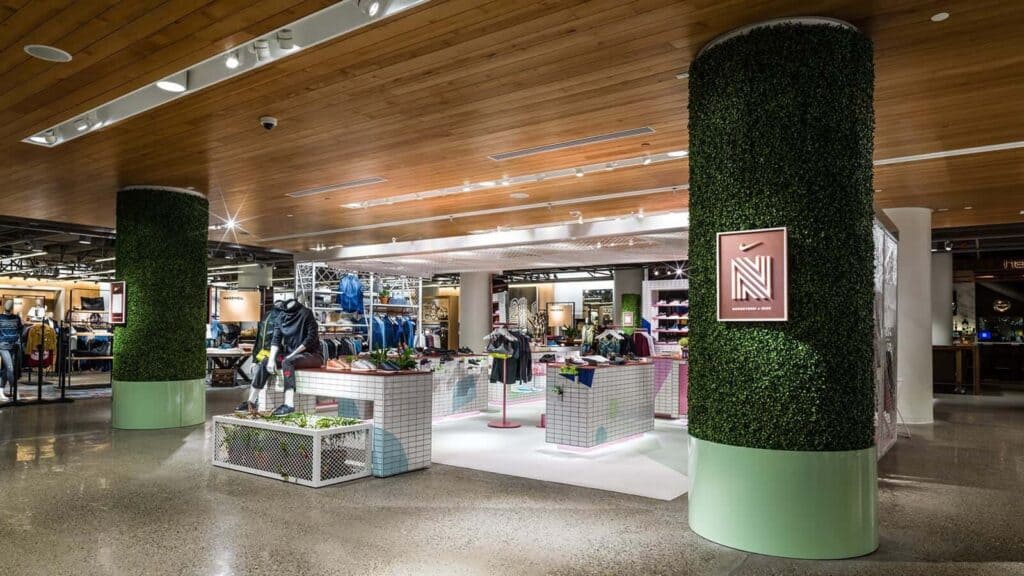
- For Nike, Dynamic helped create experiential environments for NBA All-Star Games, NFL Super Bowls, the Olympics, and product introductions. The work included on-site sourcing and construction as creative needs evolved, followed by dismantling, packing, and shipping the full design after the event.
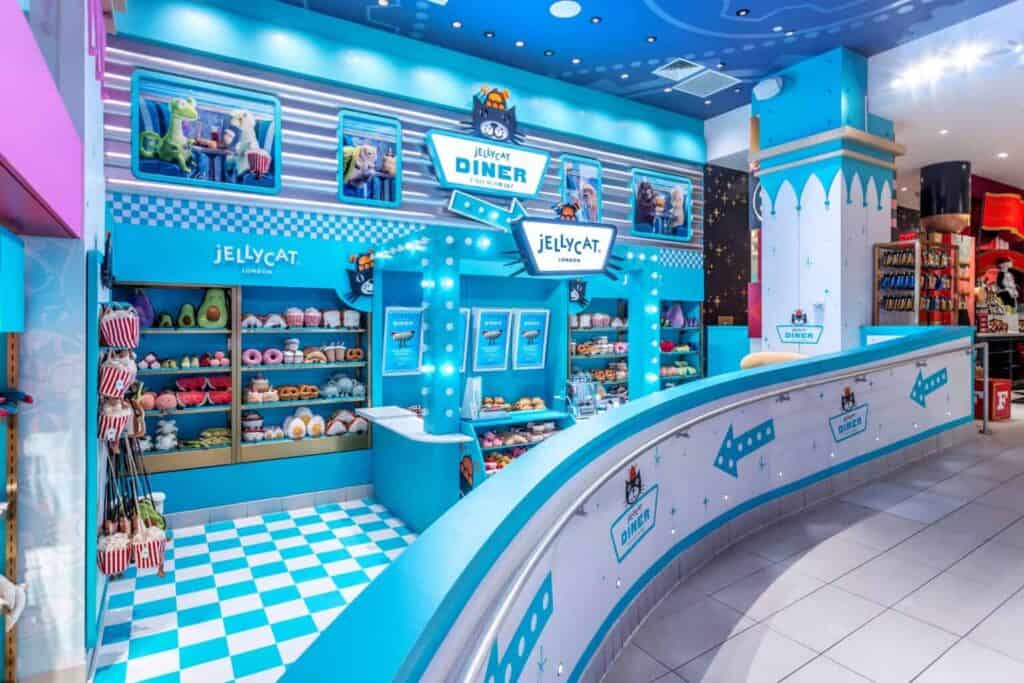
- For Jellycat, Dynamic supported a shop-in-shop installation inside FAO Schwarz at Rockefeller Center in New York City. The space shows how experiential merchandising can turn a product display into a destination. With Jellycat’s playful brand world brought into one of the city’s most recognizable toy stores, the installation gives customers a reason to stop, explore, and connect with the products in person.
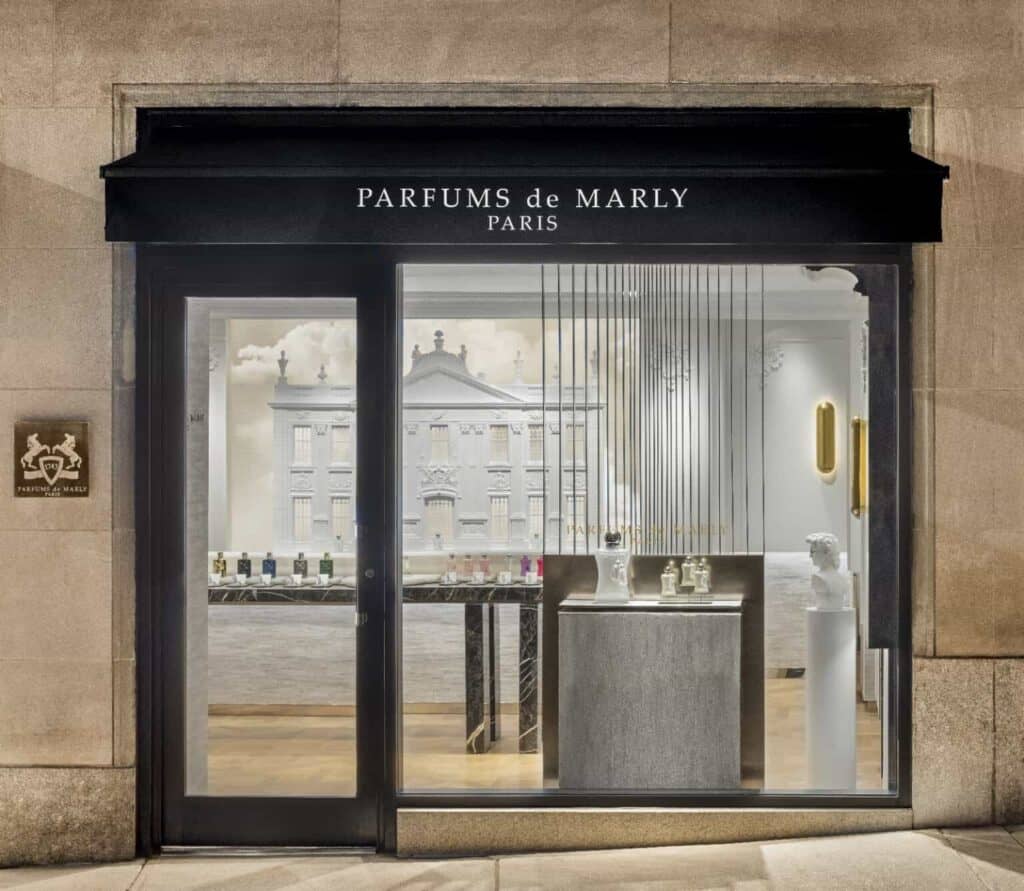
- For Parfums de Marly, Dynamic supported the brand’s Madison Avenue boutique, a luxury environment with mouldings, parquet floors, gilded details, hidden screens, a VR headset, LED tile screen installation, and a plaster replica of the Château de Marly.
- For LN-CC, Dynamic worked on the brand’s east London store, supporting design development, approvals, renovation, unusual millwork features, an octagonal tunnel entrance, and a programmable LED-lit club room.

These examples show how experiential merchandising depends on the details customers see, touch, move through, and remember.
Experiential merchandising works best when the creative idea and the installation plan are connected early. When those details are managed properly, the finished store environment is easier for customers to understand, easier for staff to support, and more consistent with the brand.
Ready to Bring Experiential Merchandising Into Your Store?
Experiential merchandising starts with a strong idea. But the idea only works when the physical store environment can support it.
That means planning the fixtures, graphics, displays, materials, installation, and store flow that help customers see, touch, move through, and remember the experience.
At Dynamic, our unique combination of in-house offerings makes us your single-source provider for retail fixtures, visual merchandising, and store installation support. No one understands retail design and installation better than we do.
Contact us to learn how we handle any aspect of your business – from an individual installation to a global roll-out.