
Learn why brand identity matters, how it helps your store stand out, and how it can shape stronger pop-up shop marketing strategies.
Yellow M. Three stripes. Red and white. Swoosh. Blue and yellow. Big red tongue.
Each of these represents a brand. Can you name them?
McDonald’s. Adidas. Coca-Cola. Nike. Ikea. The Rolling Stones.
That is brand identity at work. When you see those logos, colors, and visual cues, you already know what to expect from the products, stores, social media, marketing, and customer experience.
Brand identity is about more than a logo or typeface. Brands such as Patagonia, The North Face, and Decathlon show how identity can shape the way customers feel before they ever pick up a product.
Reading the brand names gives you a feeling. A feeling like “I can climb that mountain,” “I can achieve that goal,” or “I can do that thing I have always wanted to do.”
This is the missing link of brand identity that many brands overlook. Imagine a thread connecting your products, marketing, sales, store design, social media, customer service, and in-store experience. That thread is your brand identity.
Brand identity is also what makes strong pop-up shop marketing strategies work. A pop-up has limited time to get attention, explain the brand, invite people in, and make the experience memorable. If the identity is unclear, the pop-up can feel like a temporary display instead of a meaningful brand moment.
The Link Between Brand Identity and Pop-Up Shop Marketing Strategies
BBrand identity is the way your brand looks, sounds, feels, and behaves across every customer interaction. In retail, it shows up through your store design, window displays, graphics, fixtures, lighting, product presentation, customer service, and marketing.
For pop-up shops, brand identity matters because the experience must be communicated quickly. Customers may only see the space for a few seconds before deciding whether to stop, walk in, take a photo, ask a question, or make a purchase.
Strong pop-up shop marketing strategies usually connect the campaign, location, design, product story, social content, signage, and in-store experience around one clear brand idea. The marketing gets people interested. The physical pop-up has to deliver on that promise once they arrive.
Pop-Up Shop Marketing Strategies Start With Brand Identity
A successful pop-up shop depends on more than a busy location or a good-looking display. It needs the right marketing before, during, and after the event. But the marketing only works when it is grounded in a clear brand identity.
Dynamic helps brands and retailers with the branding, buildout, graphics, fixtures, and installation details that make pop-ups and temporary retail spaces feel intentional. That work shows how important it is for the physical environment to match the message customers see online, in-store, and on the street.
Remember these eight essential pop-up shop marketing strategies that connect directly to brand identity:
- Build the pop-up around one clear brand idea. The concept should be easy to understand from the window, entrance, signage, and product presentation.
- Use the storefront to stop foot traffic. Window displays, exterior graphics, lighting, color, and product placement should make people understand the experience before they walk in.
- Make the space easy to share. A photo moment can help, but it should still support the brand story. The goal is not just attention. The goal is attention that makes sense for the product and the customer.
- Connect the campaign to the physical space. Social posts, email, paid ads, influencer content, and local promotion should use the same message customers experience inside the pop-up.
- Give customers something useful to do. Product trials, personalization, demonstrations, limited-edition merchandise, samples, workshops, or hands-on displays can turn curiosity into participation.
- Plan the flow before installation. The best marketing idea can fall flat if customers do not know where to enter, what to do first, where to browse, or how to buy.
- Make the experience feel complete. Fixtures, graphics, signage, millwork, lighting, product displays, and staff areas should all support the same brand story.
- Keep the follow-up connected. QR codes, email capture, limited-time offers, post-event content, and nearby store or ecommerce links should help the customer continue the relationship after the pop-up closes.
Your pop-up shop marketing strategy must be tailored to your brand and customers. Successful pop-ups help the brand show up clearly, consistently, and memorably in the space customers actually experience.
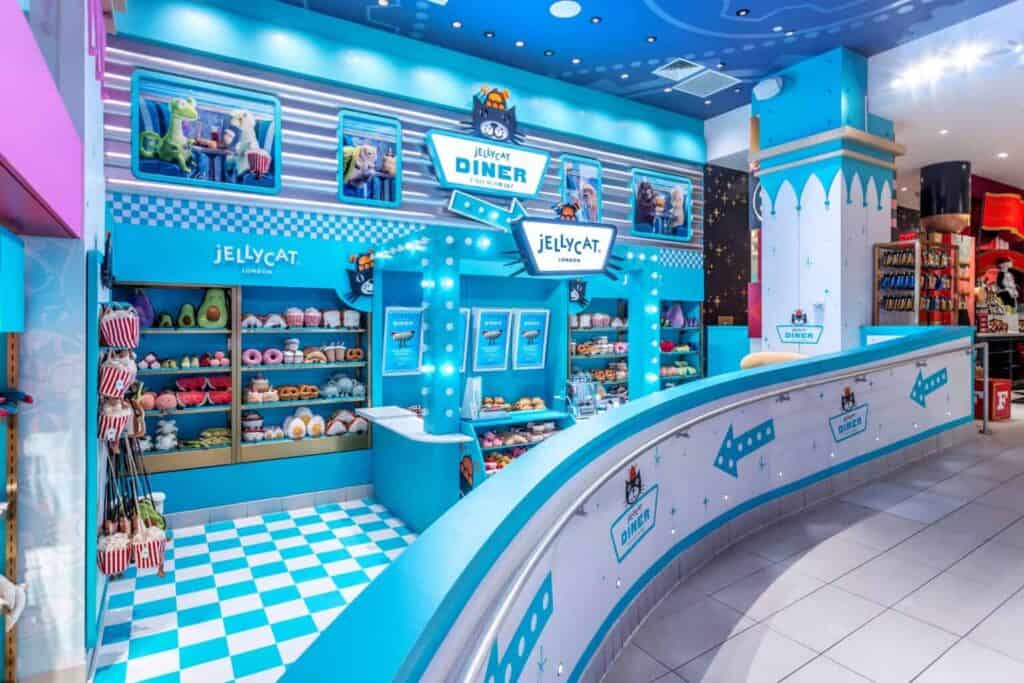
The Jellycat installation at FAO Schwarz turned a product display into a playful shop-in-shop experience inside one of New York City’s most recognizable toy stores. The space worked because the product, setting, fixtures, and customer experience all supported the same brand feeling.
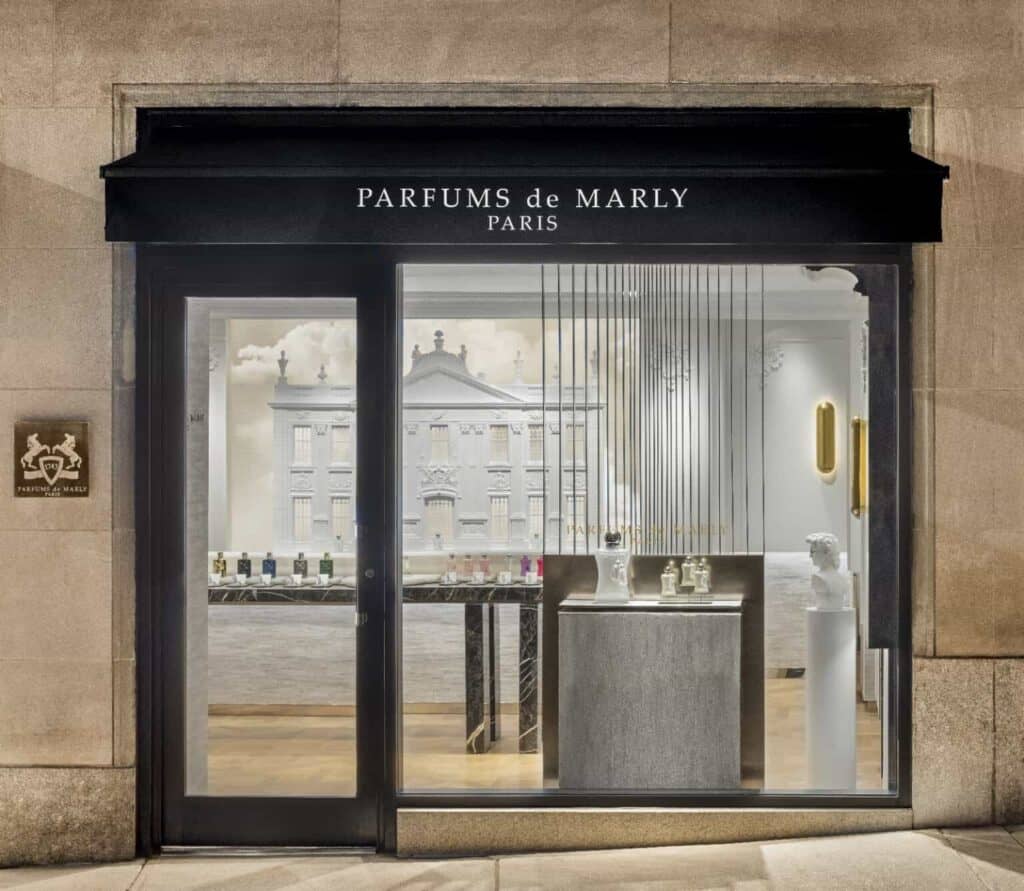
Parfums de Marly‘s Madison Avenue boutique shows a different kind of brand identity. The retail environment used luxury materials, detailed finishes, and immersive features to create a premium setting that felt connected to the brand’s story.

LN-CC‘s east London store shows how a distinctive physical environment can become part of the brand itself. Unusual millwork, a memorable entrance, and atmospheric retail details helped create a space customers could recognize and remember.
Why Brand Identity Matters
NBrand identity matters because it is what gets people walking into your store and buying from you.
Think of brand identity as hard currency. You and your customers can bank on it. It shapes and guides what you do. Your customers trust and rely on it to give them what they want and expect.
What is your brand identity? What does your brand communicate to customers? What story does your brand tell?
Brand identity develops the intangibles that drive brand loyalty and connection:
- Ease
- Trust
- Comfort
- Safety
- Affirmation
- Value
- Expertise
- Appreciation
Think of a brand you have always liked. The brand you follow, trust, and compare other companies to. That brand has nailed brand identity. You may not be able to explain exactly what it is, but you feel it. You connect to it. It is almost as if the brand is speaking to you.
That is brand identity.
How to Create a Brand Identity
To create a brand identity, start with these questions:
- Who? Who are we? Who do we want to be? Who is our target market?
- What? What do we believe in? What do we offer? What does our target market want and need?
- Why? Why do we exist? Why did we develop this product, idea, or service? Why should people care?
- Where? Where are our customers? Where do they spend their money and time? Where is our opportunity?
- When? When do people need and use our product? When do we want to be in their lives?
- How? How do we solve challenges, needs, and gaps for our target market? How do we support our customers, make their lives easier, and help them be who they want to be? How do we want people to feel and think about us?
You need to know your company, product, mission, values, and reason for being. Once you know this, you can understand how you fit into people’s lives.
This is how you develop the story for your brand and the story for your customers. Your customers have an ideal – a way they see themselves and how they want to be seen. Your story needs to connect with that.
What story does your retail store tell? If you covered up your logos and marketing, what would make the space different from your competitors? Do your stores have a personality? Do you have the intangibles that appeal to what your customers need and want?
Incorporating Your Brand Identity Into Your Retail Store Design
Nike. Glossier. Ikea. Uniqlo. LEGO. Apple. Starbucks.
These retail stores are standouts for incorporating brand identity into retail design. Just reading the brand names, you know what to expect when you walk into the store.
Each of these brands knows how to showcase unique aspects of its brand identity while adapting to the customers and locations it serves.
They do this by bringing brand identity into the seven core elements of retail store design:
1. Window Displays
The first thing people see is your window display. You have only a short moment to grab the attention of someone walking by. Put your brand identity and story on full display in your window.
Uniqlo did this well with their Liberty campaign. From the window display, fixtures, mannequins, signage, through to their digital marketing – it all said Liberty.
2. Graphics
Graphic installations and signage – including banners, films, floor graphics, 3D lettering, wallpapers, murals, and cut letters – are key to expressing your brand identity and making it easier for people to spend time in your store.
Use graphics to showcase your brand message, highlight your mission, guide people to featured products, and remind customers why they feel connected to your brand.
3. Color
Quick – what color is the Ikea logo? Blue and yellow.
You know this because Ikea stands out for how well it incorporates those colors into its retail stores, marketing, and merchandising.
The Glossier flagship store in SoHo is another example of how color can shape the way a retail space feels. From the monochrome design to the bright red accents and subtle white subway tiles, the use of color supports the brand experience.
4. Millwork
Do not overlook the importance of millwork and fixtures. Checkout displays, shelving, product displays, digital displays, experiential features, and shop-in-shop installations all need to support the brand.
Creative use of millwork and fixtures allows you to show your message, personality, value, and point of view throughout the store. Think of the shelving in Costco and the shelving in Apple. Very different brand identities. Very different approaches to retail display.
5. Lighting
Lighting helps shape mood, focus, and movement inside a store.
Walk into a LEGO store and you feel the energy right away. The lighting, color, signage, and displays work together to create a space that feels bright, active, and easy to explore.
Lighting can draw customers to feature products, make materials feel warmer or more refined, and help a store or pop-up feel clear instead of crowded.
6. Space and Store Layout
Space and store layout are key visual merchandising tools for guiding people through your story and directing them to key sales areas.
Think about how you position millwork and use design strategies such as curves, angles, interactive displays, and places to pause.
Your store layout needs to suit the shopping style and mood of your customers and products. A loop layout gives shoppers a guided experience. A grid layout makes it easy for people to choose their aisles and shop for specific products. A free-flow layout encourages discovery and browsing. A fixed path layout with showrooms, shop-in-shops, and hands-on displays can support impulse shopping.
7. Consistency
Nike. Apple. Ikea. LEGO. Patagonia. Decathlon. Uniqlo. Starbucks. They are all consistent. While each store has a unique personality, you know what you will get.
Every aspect of your retail store design is part of the thread connecting your marketing, sales, customer service, and products together. You need to consistently remind people why they feel connected to your brand and why you are the right choice for them.
Consistency makes it easier for people to trust your brand and feel like they know you. When you veer off-brand, you may gain attention, but you also risk confusing people and making them question why they chose your brand over another.
The thing that gives brands like Uniqlo, LEGO, Apple, Starbucks, Nike, Ikea, and Glossier an edge is that they are not afraid to show who they are, what they believe in, and why people connect with them.
Don’t Get Caught Up in Trends
Simplicity. Authenticity. Personal. Inclusive. Bold. Strong. Outlier. Activist.
These may show up in brand identity conversations, but the secret is that it does not matter what the leading brand identity design trends are if they do not fit your brand.
What matters is knowing the who, why, when, where, what, and how of your brand. When you understand this, trends are just trends.
Your customers are smart. They are quick to dismiss brands that jump from trend to trend without a clear reason.
Look at the stalwarts of brand identity. They stick to their story and know how to emphasize specific traits and personalities when and where it makes sense.
Be the brand that knows who it is. That is more powerful than chasing every new idea. When you know who you are and what your customers want from you, your store, your marketing, and your pop-up experiences have a stronger foundation.
At Dynamic, our unique combination of IN-HOUSE offerings makes us your single source provider for graphics, window displays, and branding installations. No one understands graphic and branding installation better than we do.
Contact us to learn how we can handle any aspect of your business – from an individual installation to a global roll-out.