
Trust in our 30 plus years of retail design and installation expertise
Successful brick-and-mortar retail stores all have one thing in common—they put the customer first.
At Dynamic, we work with leading brands and retailers around the world, and we know that no matter what you sell, long-term success depends on customer loyalty and happiness.
Designing, fitting out, and installing a retail store that delivers on customer satisfaction and sales requires a well-thought-out plan from day one.
In this guide, we’ve brought together our top retail design and installation insights from 2025—so you can feel confident your store does everything you and your customers expect.
At Dynamic, we’ve been at the forefront of retail design and installation for over 30 years. You can trust us to make your space exactly what you need.
Four Rules of Retail Design and Installation
These four rules should shape every decision you make about your retail design and installation:
- People shop with their senses.
- Retail fixtures are part of your sales team.
- Your store is for your customers – not you.
- Great products cannot compensate for poor retail design.
Something to Think About: Who have you designed your store for? You or your customers?
The Power of Great Retail Design and Installation
These statistics highlight why you need to pay as much attention to your retail fit-out, installation quality, and design as you do to your products:
- 57% of consumers want to see, touch and feel items before they buy them
- 32% of consumers prefer the personal service provided with in-store shopping
- 60% of Gen Z shoppers abandon their purchase due to long checkout lines
- 76% of consumers enter a store they have not previously visited based on the signage
- 62% of shoppers make impulse purchases due to an appealing retail display
- 73% of shoppers say good visual merchandising is a reason to return
- 8 out of 10 shoppers make buying decisions based on what they see in-store
(EY Future Consumer Index, How Gen Z Is Reimaging Retail and the Future of the Store, 10 Amazing Stats Showing the Power of Retail Displays, 30 Stats That Prove Visual Merchandising Is More Important Than Ever)
Something To Think About: What compels you to shop in brick-and-mortar stores?
6 Must-Do Steps for a Successful Retail Store Design and Installation
Trust our advice on what it takes to create a successful retail store design and installation:
- Site Survey and Space Planning: Site surveys and space planning help you optimize your physical layout by documenting existing infrastructure and analyzing customer traffic patterns to maximize sales potential.
This enables you to strategically arrange merchandise, fixtures, and displays to create an engaging shopping experience that guides customers through the store and increases product visibility. - Planning and Research: Our team learns about your brand, store ethos, customers and market, and vision for your brick-and-mortar location. We want to know the who, what, how, and why behind your products and brand.
- Design: Rely on our expertise and guidance to choose the best millwork, fixtures, lighting, signage, graphics, and store layout for your brand and products.
- Assembly and Install: Our local team of project managers and store display installers receive, assemble, and install your retail displays, fixtures, millwork, lighting, window displays, and signage—bringing your vision to life.
- Merchandising and Finessing: It’s time to display your products and make any final tweaks to retail fixture placement and store layout.
- Maintenance and Logistics: Keep your retail store looking good with preventive and reactive maintenance and take advantage of our logistics expertise for your seasonal fixtures and store inventory.
Something To Think About: If you could redo your retail store design, what would you do differently?
The 8 Types of Retail Surveys You Need To Know About and Use
Guesswork and estimation does not work when it comes to ceiling height, the number of windows, signage location and types, or the locations of electrical outlets.
A retail survey tells you what your store really looks like and what is actually happening inside it:
- Architectural or As-Built Surveys: document the physical layout, dimensions, and structural elements of a space to ensure accuracy in planning, design, and construction.
- Matterport Surveys: an interactive digital walkthrough of your retail stores, allowing you to virtually explore and see a location on your computer, phone, or tablet without being physically present.
- Field and Site Audits: are non-drawing data collections and checklists of information about your retail space such as store layout details, product placement, visual merchandising, and store branding compliance.
- Interior Surveys: a precise measurement and documentation of the internal layout, including walls, ceilings, fixtures, and mechanical systems, to support space planning, renovations, and retail installations.
- Fixture Verification Surveys: confirm the presence and condition of fixtures in your retail space, ensuring all fixtures and millwork are installed, functioning, and maintained as planned.
- Asset Tracking Surveys: involve cataloging and verifying the location and condition of assets within your retail store, helping you maintain accurate records and counts of items such as number of chairs, types of signage, promotional materials, or number of POS units.
- Space Planning Surveys: help you understand and analyze how retail fixtures, layout, and visual merchandising can be used to optimize your space for efficiency, customer experience, and functionality.
- Compliance and Marketing Surveys: verify that your retail spaces comply with any variable you want to measure, such as the use of marketing and promotional materials, safety compliance, building code adherence, accessibility standards, and more.
Something To Think About: What is really inside your store?
Do You Need An Architectural Or As-Built Survey? 10 Questions To Answer
If you answer no to one or more of these 10 questions, you definitely need a retail architectural or as-built survey:
- Do we have accurate and up-to-date floor plans and measurements for all of our retail spaces?
- Do we have recent drawings and models of what our stores look like today?
- Are we confident there haven’t been undocumented changes to this retail location?
- Do we have 3D models and visuals of every store, including fixtures, lighting, walls, ceilings, windows, and millwork details?
- Do we have updated drawings and models for the retail spaces we are considering buying or taking over?
- Is it easy for us to access the architectural drawings and models for every store in our portfolio? Is there a searchable database or extranet we can use to see inside every store?
- Do we have up-to-date mechanical, electrical, plumbing, and HVAC systems drawings and details?
- Did the previous owner of this space provide us with architectural drawings or survey data?
- Are we confident our design plans will fit seamlessly in this refurbishment, global redesign, or new brick-and-mortar opening?
- Are our store owners and managers completely happy with the customer flow, store layout, foot traffic, and product visibility?
Something To Think About: What kind of feedback are you receiving from customers on their in-store experience?
The Power of Pop-Up Branding For Retailers
The statistics tell it like it is—there is real power in pop-up branding:
- 42% increase in nearby foot traffic for retail locations hosting fashion and apparel pop-ups
- 18% conversion rate for fashion pop-ups stores compared to 11% for permanent stores
- $95 billion in sales projected for the 2025 global pop-up retail market
- 63% boost to brand visibility and stronger customer relationships with pop-up branding and shops in the US
- 80% of retailers that opened a pop-up considered it successful and 58% plan to open another pop-up shop
- 51% increase in market visibility
- 46% increase in sales and social media engagement during a pop-up installation
- 150% increase in social media engagement for fashion and apparel brand-hosted pop-ups
- 29% increase in new customers after hosting a pop-up store
- 58% of shoppers who make a purchase at the pop-up then follow the brand online
(Top 20 Retail Pop-Up Fashion Store ROI Statistics 2025, Pop-Up Retail Statistics, Retail Pop-Up Must-Haves for 2025, Pop-Up Shop Guide 2025, Are Pop-Up Shops Genuinely Effective In Bolstering Sales?)
Something To Think About: What will you do differently in 2026 to attract more foot traffic?
How To Use Millwork Installation To Tell Your Brand Story
These examples from leading retailers including Warby Parker, Glossier, Apple, and Starbucks show how millwork installation can tell distinct and compelling brand stories.
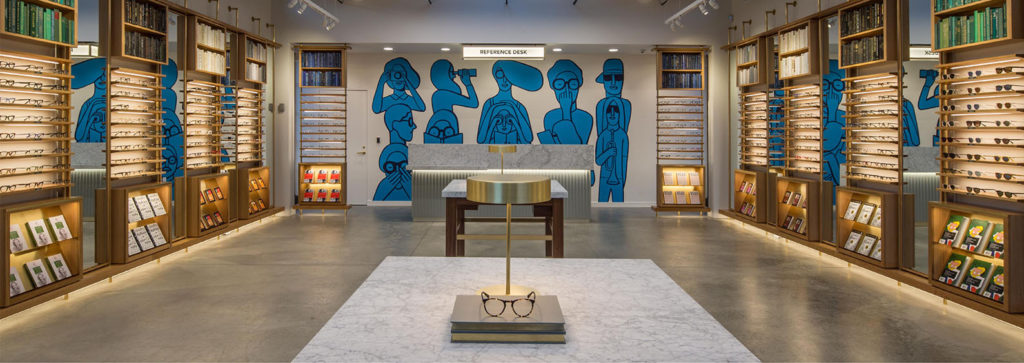
- Warby Parker has reimagined what an eyewear store can be—inviting customers to see, quite literally, from a new perspective. Built-in shelving, brass accents, and sculpted display tables reference the brand’s literary roots, while every fixture connects back to perception—the idea that how we see the world shapes how we feel within it.
- Glossier uses millwork to make its minimalist, human-first brand feel approachable and distinct in a crowded beauty market. Rounded counters, built-in arches, and softly textured surfaces create a sense of calm and invitation—encouraging touch and interaction, transforming product testing into a social, sensory experience.
- Apple’s millwork mirrors its core design principles of clarity, precision, and simplicity. Seamless wood tables, clean lines, and integrated fixtures create calm, open spaces where technology feels accessible rather than complex. Every material choice, from light oak to glass and aluminum, reflects Apple’s brand ethos of thoughtful design that prioritizes usability, comfort, and quiet confidence.
- Starbucks uses millwork to create a sense of familiarity that feels both global and local. Warm woods, curved counters, and layered textures give each store a consistent look while still allowing for regional materials and cultural details.
Through careful craftsmanship and material choices, Starbucks—a Dynamic client—communicates reliability and comfort, creating an environment where people know what to expect, even in a new place.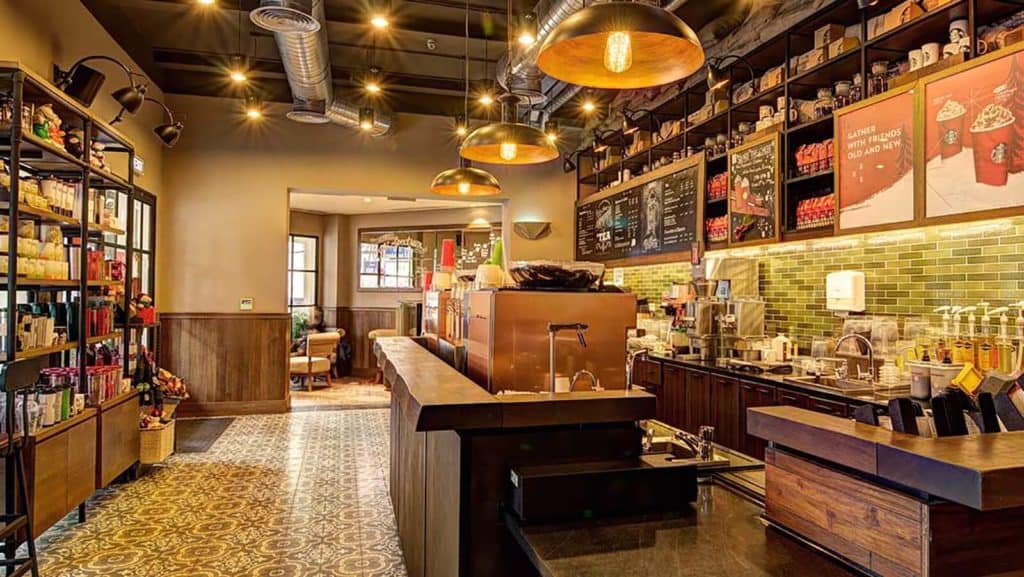

“The millwork and fixtures are like the stage design for everything in the store,” says Evan Giniger, Founder and President of Dynamic, “They set the stage for the whole show, where the products are the actors working in an environment that was designed just for them. Every detail matters and is noticeable to the audience, or the shoppers.”
Something To Think About: What does your retail store design say about your brand? What is the first impression people get when they walk into your store?
7 Ways To Use Millwork To Create A Shareable Retail Design
Make sure you’re incorporating these 7 ways to use millwork, fixtures, graphics, and signage to create shareable brick-and-mortar retail design:
- Design focal points that invite interaction
Customers are naturally drawn to spaces that feel intentional and visually striking. A sculptural fixture, feature wall, or layered display gives people a reason to pause and engage. These elements photograph well and help anchor your brand visually across social channels.
MAC’s dynamic in-store displays and window installations use bold color, lighting, and texture to create photo-ready moments that showcase each collection. - Blend digital and physical storytelling
Integrating technology into millwork installation—through screens, motion, or lighting—adds depth to your brand narrative and creates dynamic moments worth capturing.
When digital features are framed within natural materials or architectural details, they feel immersive and memorable rather than promotional. - Use materials that reflect your brand personality
Material selection defines how customers feel in your space—whether grounded, luxurious, playful, or refined. Consistent use of texture, tone, and craftsmanship creates a sensory connection that customers remember and want to share.
Levi Strauss stores pair natural wood millwork with industrial metal accents, creating a tactile, timeless aesthetic that reinforces the brand’s craftsmanship and authenticity.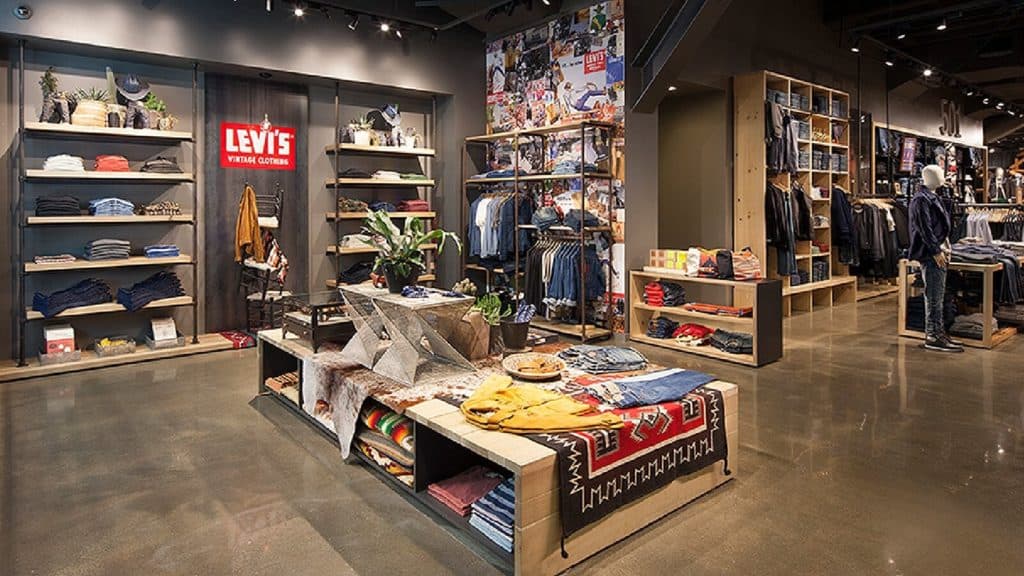

- Create visual rhythm with fixtures and layout
The spacing, proportion, and repetition of fixtures shape how people move through your store. A balanced layout creates visual harmony and camera-friendly sightlines, making it easy for customers to capture your space as part of their experience.
Coach uses symmetrical millwork, framed shelving, and open pathways that lead customers through key product stories while maintaining visual consistency across locations.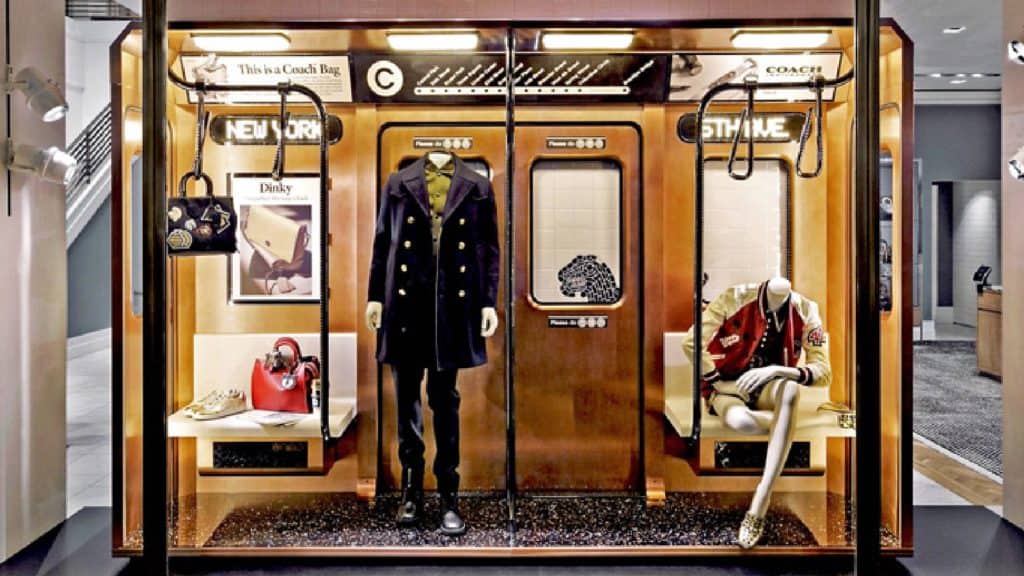
- Incorporate branded graphics
Subtle graphics integrated into walls or fixtures feel elevated and cohesive, allowing your products—not your signage—to speak loudest.
When done well, these details reinforce brand cues and photograph naturally without visual clutter. - Signage that complements
Signage should guide customers and reinforce brand identity without overpowering the millwork or architecture. Materials, scale, and lighting should feel consistent with the surrounding finishes, helping signage become part of the story rather than a layer on top. - Balance consistency with local expression
A strong design system can be adapted across locations without losing its essence. Keeping your millwork, fixtures, and graphic language consistent while introducing local materials or cultural elements makes your stores feel distinctive—and more shareable.
Something To Think About: How can you make your store shareable and Instagrammable?
How A Good Retail Fit-Out Elevates Your Store Design
Details such as rounded or square corners, lighting, shelving materials, and color palettes all matter. They tell your brand story. They send signals to people telling them your store is or isn’t right for them.
Make sure you’re sending the right signals with your retail shop fitting and installation:
- Warm lighting creates a flattering, comfortable beauty or lifestyle environment.
- Bright, cool lighting energizes tech and fashion interiors.
- Natural textures and matte finishes signal warmth, authenticity, and quality.
- High-gloss or synthetic materials create a modern, high-energy, contemporary look and feel.
- Color palettes subtly influence mood: calming neutrals, energizing brights, elevated dark tones—immediately signaling to people how they should expect to feel in your store.
The Jellycat Diner shop-in-shop at FAO Schwarz in New York City’s Rockefeller Center is an ideal example of the power of color, lighting, texture, and materials to create a vibrant, fun, and welcoming shopping experience.
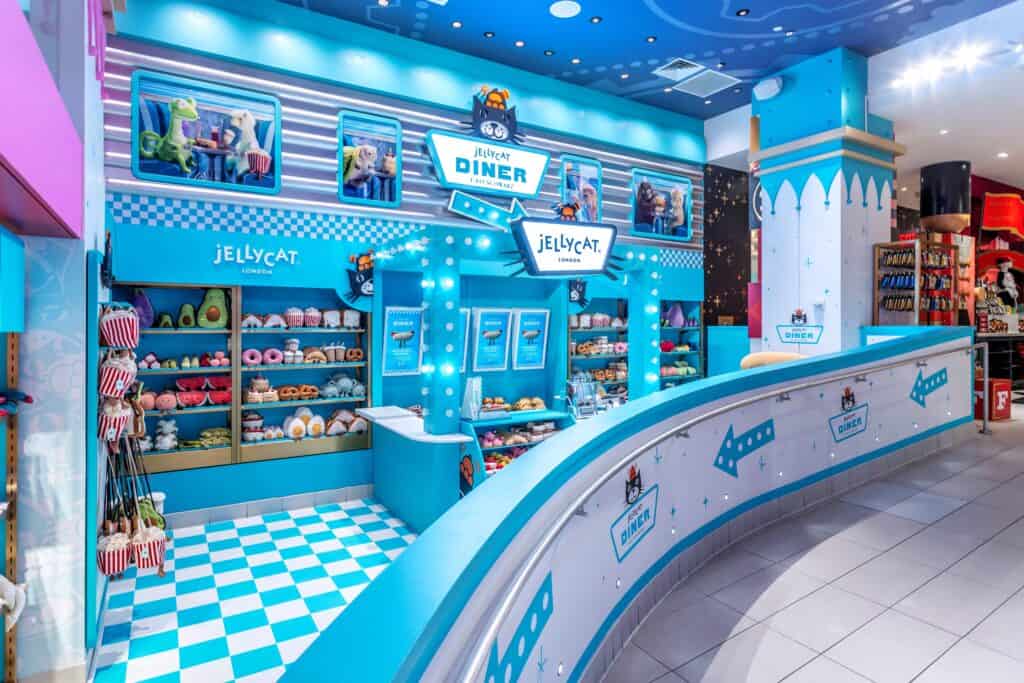
Jellycat Diner shop-in-shop by Dynamic at FAO Schwarz, NYC Rockefeller Center
- Wide aisles reduce friction and invite exploration, giving people room to relax and browse.
- Clean sightlines help shoppers slow down, relax, and have an easy shopping experience.
- Strategic fixture placement highlights hero products, creates natural discovery zones, and helps shoppers move through the store without feeling lost or overwhelmed.
- Eye-level shelving and displays draw attention to products, encourage people to slow down, and help them discover items they weren’t looking for.
- Fixtures and millwork must align with your overall design intent, creating a consistent in-store experience from entry to checkout.
- The shape of your millwork and fixtures, right down to rounded or sharp corners, sets the tone for your store. Rounded corners create a soft, welcoming feel, while sharp corners give a space a sleek, modern, and more structured vibe.
- Clean, flush transitions between materials create a sense of flow, while uneven transitions interrupt the visual rhythm and make the space feel less refined.
- Fixture height shapes how comfortable people feel in your store. A gondola that’s just a few inches too tall blocks sightlines and makes customers feel closed in, while one set too low means products are easy to miss.
- Cabinet pulls, knobs, handles, and even flooring choices may seem subtle, but they quietly communicate your store’s quality standards and the customer experience people can expect.
The Monica Vinader flagship store features poplar veneer, red travertine, and live edge oak shelving—every design element is aligned with the brand’s reputation for quality, craftsmanship and sustainable practices.
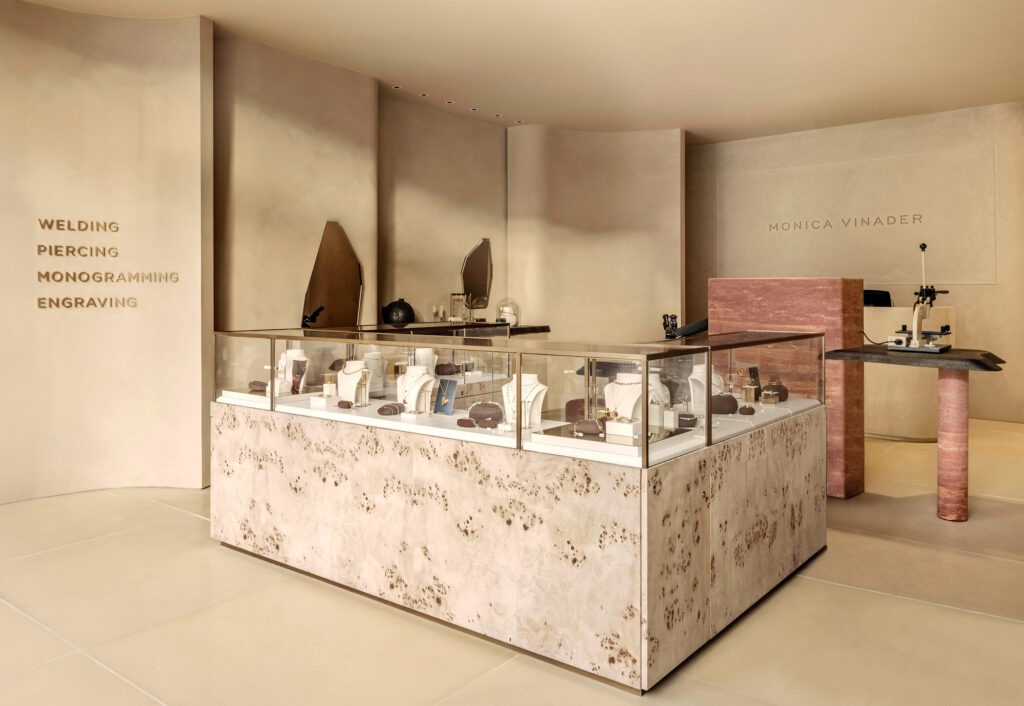
Monica Vinader features intricate millwork installation by Dynamic
Something To Think About: Take a look around your store—what do you see and feel?
Remember, the details matter. Your customers can buy from anywhere—you need to give them a reason to visit your store, trust your brand, and stay loyal.
Professional retail design and installation is your advantage. When every detail is intentional, your store sends the right signals to the right people.
At Dynamic, our unique combination of IN-HOUSE offerings makes us your single source provider for all your retail installation and design needs. No one understands retail installation and design better than we do.
Contact us to learn how we handle any aspect of your business—from an individual retail store to a global rollout. We are here for you.